Why Equal Inheritance Can Put Your Family Home at Risk
“I just want to be fair to all my children.”
Estate-planning attorneys hear that sentence often, and it comes from a good place. Parents do not want anyone to feel overlooked. They do not want old wounds reopened after they are gone. They do not want their will or trust to become the reason their children stop speaking.
So the plan seems simple: divide everything equally.
That works well for some assets. It can work for bank accounts, investment accounts, and personal property that can be sold or shared without much emotion. But a family home is different. Treating every child the same on paper can create a very unequal burden in real life.
Equal shares in a house can leave one child fighting to keep a roof overhead while the others wait for their inheritance. It can turn siblings into reluctant co-owners. It can force decisions no one is ready to make at the worst possible time.
This article is for general information only and is not legal advice. Estate planning rules vary by state, and families should speak with a qualified estate-planning attorney about their own situation.

A house is not the same as a bank account
A bank account can be divided into percentages. If there are three children, each can receive one-third. The transfer may still involve paperwork, but each person can take their share and move forward.
A home does not divide that neatly.
When several children inherit the same property, they become co-owners unless the estate plan says otherwise. That means each child may have a legal interest in the home, but their needs may be completely different.
One child may live in the home. Maybe that child cared for a parent, helped pay expenses, or stayed nearby while siblings moved away. To that child, the home may be a residence, a place of stability, and the center of daily life.
Another child may live across the country and see the property mainly as an inheritance. That child may need money for a down payment, medical bills, debt, or retirement. A third child may not need the money but may not want responsibility for taxes, repairs, and insurance.
None of those views are automatically wrong. The conflict comes from forcing different needs into one shared asset.
The family may then face hard questions:
Who pays the mortgage, property taxes, insurance, and utilities?
Who pays for repairs, maintenance, and major improvements?
How long can one beneficiary live in the home?
Should the property be sold, rented, or kept?
What happens if one owner cannot contribute to expenses?
What happens if one beneficiary gets divorced, dies, or files for bankruptcy?
Can one sibling force a sale?
A will or trust that says “divide everything equally” may not answer any of these questions.
Equal shares can create unequal pressure
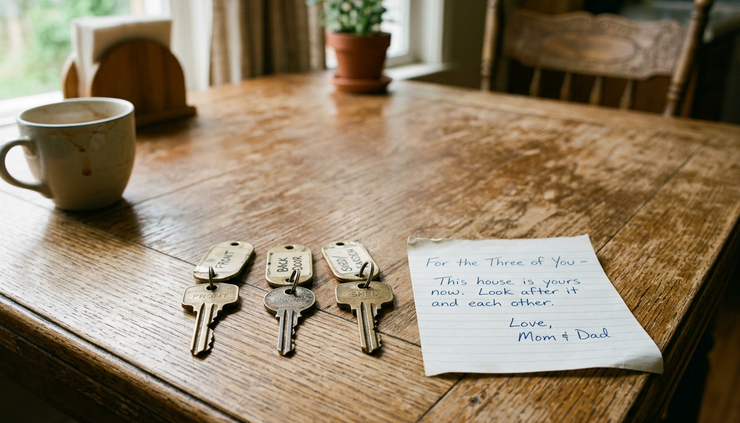
Imagine a parent has three adult children. One child has lived in the parent’s home for several years and helped with caregiving. The parent’s estate plan leaves the house equally to all three children.
On paper, that looks fair.
After the parent’s death, the child in the home wants to stay. The other two children want their share of the value. The child in the home cannot afford to buy them out because home values have risen, interest rates are high, and the child’s savings are limited.
Now the siblings are stuck.
If they keep the house, the nonresident children may feel their inheritance is trapped. If they sell the house, the resident child may lose their home. If they rent it out, they become co-landlords. If they delay, expenses keep coming due.
This is where resentment grows.
The child living in the home may say, “I took care of Mom. I kept this place going. Why are you pushing me out?”
The other children may say, “We loved Mom too. Why should our inheritance be tied up indefinitely?”
Both sides may feel morally right. That is what makes these disputes so painful.
A parent may have intended equality, but the result can feel unfair to everyone.
Co-owning inherited real estate can be more complicated than families expect
Some families co-own property peacefully for years. They communicate well, share expenses, and agree on major decisions. But that takes planning, cooperation, and enough money to handle surprises.
Inherited co-ownership often begins during grief. People are tired. Emotions run high. Old family roles resurface. One person may feel responsible for everything while another feels excluded from decisions.
The practical problems can also pile up quickly.
One person may use the property while everyone owns it
If one beneficiary lives in the home, should that person pay rent to the others? Should they pay all utilities? What about property taxes and insurance?
If the estate plan does not answer these questions, siblings may have very different expectations. One may assume the resident child should cover all costs because they are the one living there. Another may believe all owners should contribute because all owners benefit from preserving the property.
Repairs can become a flashpoint
Homes need money. Roofs leak. Furnaces fail. Plumbing breaks. Insurance premiums rise.
If one sibling wants to replace a roof and another refuses to contribute, what happens? If the resident child pays for repairs alone, do they get reimbursed before the property is sold? If one child makes improvements, did they increase the home’s value for everyone or spend money without approval?
Without written rules, even ordinary maintenance can become a family argument.
A beneficiary’s personal problems can affect the property
When multiple people own real estate, each owner’s life can affect the asset. A divorce, creditor issue, bankruptcy, lawsuit, or death may complicate ownership.
For example, if one beneficiary dies, their share may pass under their own estate plan or state law. That could bring a spouse, child, or other relative into the ownership structure. The original siblings may suddenly co-own the family home with someone they never expected.
A forced sale may become possible
In many states, a co-owner of real estate may have the right to seek a partition action, which can ask a court to divide or sell the property. The details vary by state, and the process can be expensive and stressful.
The important point is simple: if the plan leaves children as co-owners without clear instructions, the family may lose control over what happens next.
Fairness may require different treatment
Many parents worry that leaving different assets to different children will look like favoritism. That is a real concern. Children may read unequal distributions as a final judgment on love, loyalty, or worth.
But fairness does not always mean identical shares of the same asset.
A fair plan may account for:
Who lives in the home
Who has contributed to the home’s upkeep
Whether one child provided significant caregiving
Whether the estate has enough liquid assets to balance inheritances
Whether a child can realistically afford the carrying costs
Whether the family wants the home kept or sold
Whether co-ownership is likely to work
The key is to define fairness before a crisis, not after.
Parents can still aim for equal value while avoiding equal ownership of the house. For example, one child might receive the home, while other children receive investment accounts, life insurance proceeds, or a larger share of other estate assets. If there are not enough other assets, the plan might include a buyout structure, sale instructions, or a trust arrangement.
The goal is not to reward one child and punish another. The goal is to prevent a house from becoming a battle line.
Planning options can reduce the risk
There is no one-size-fits-all answer. The right estate plan depends on state law, family dynamics, asset values, debts, taxes, and the parent’s goals. Still, several tools may help families avoid the most common problems.
Leave the home to one person and balance with other assets
If one child is already living in the home and the parent wants that child to remain there, the plan may leave the home to that child. Other heirs can receive different assets to balance the overall distribution.
This works best when the estate has enough non-real-estate assets. If most of the estate’s value is in the home, equalizing may be harder.
Life insurance can sometimes help create liquidity, but it must be planned in advance and may not be available or affordable for every family.
Give a resident child a right to stay for a set time
Some plans allow a child to remain in the home for a limited period after the parent’s death. That period might allow the child to find housing, refinance, save money, or arrange a buyout.
The plan should be specific. It may need to address expenses, repairs, insurance, taxes, and what happens if the resident child does not leave by the deadline.
A vague promise like “let my child stay as long as needed” can create years of uncertainty.
Create a buyout process
A plan can give one beneficiary the option to buy the others’ interests. It can also describe how the property will be valued, how long the beneficiary has to complete the buyout, and what happens if financing falls through.
This can reduce disputes over price and timing.
For example, the plan might require an independent appraisal or a set process for choosing appraisers. It might give the resident child a certain number of months to close. If the buyout does not happen, the property may then be sold.
Direct the sale of the property
Sometimes the cleanest answer is to require the home to be sold and the proceeds divided. That may feel harsh, especially when the home has sentimental value. But it can prevent long-term conflict if co-ownership is unlikely to work.
If a sale is required, the plan can still provide guidance. It can identify who has authority to choose a real estate agent, prepare the home, accept an offer, and handle personal belongings.
Use a trust for more control
A trust may give more detailed instructions than a simple outright distribution. It can hold the property, name a trustee, set rules for occupancy, and describe how expenses should be paid.
A trust can be useful when the parent wants to protect a resident child but also preserve value for other beneficiaries. It can also help when beneficiaries are minors, have disabilities, face creditor concerns, or may not be ready to manage property.
Trusts must be drafted carefully. A poorly written trust can create as many questions as it answers.
Put agreements in writing before problems arise
If multiple beneficiaries will inherit real estate together, written rules matter. The plan may need to address:
Decision-making authority
Payment of taxes, insurance, utilities, and repairs
Use of the property
Rent or occupancy payments
Reimbursement for expenses
Sale procedures
Buyout rights
Deadlines
What happens if an owner dies or cannot pay
These details may feel uncomfortable, but they are easier to discuss while the parent is alive and able to explain their wishes.
The family conversation matters as much as the document
Estate planning is not only about legal documents. It is also about expectations.
A parent does not need to disclose every dollar or every detail if they are not comfortable doing so. But silence can be risky when a home is involved. Children may assume very different things.
One child may believe, “The house will be mine because I live here.”
Another may believe, “We will sell it and split the money.”
Another may believe, “We will keep it as a family gathering place.”
Those assumptions cannot all be true at the same time.
A clear conversation can reduce shock later. It can also reveal problems the parent did not see. For example, a parent may think all children want to keep the home, when none of them can afford it. Or a parent may believe one child can buy out the others, when that child would not qualify for financing.
The conversation should be respectful, but it should also be concrete. A parent can explain the goal, the reason for the plan, and the basic mechanics.
This is especially helpful if the plan treats children differently. An explanation during life can prevent painful guessing after death.
Good intentions need practical instructions
Most inheritance disputes do not begin because a parent wanted conflict. They often begin because a parent wanted to keep things simple.
But simple language can hide complex consequences.
“Everything equally to my children” may sound fair. For a family home, it can leave too much unresolved. It can create co-owners who never agreed to be partners. It can put pressure on the child who lives there. It can leave other children waiting for money they expected to receive. It can turn grief into negotiation.
A better plan starts with a more practical question:
What should actually happen to the home?
If the answer is “one child should stay,” the plan should say how. If the answer is “the home should be sold,” the plan should say who handles the sale. If the answer is “the children should own it together,” the plan should give them rules for sharing costs, decisions, use, and exit rights.
Fairness is not measured only by percentages. It is measured by whether the plan can work in real life.
The takeaway for families with a home to pass on
A family home is often the largest asset in an estate, but it is also one of the most personal. That mix of money, memory, and need can make equal inheritance risky if the plan does not go further.
Parents do not have to choose between fairness and clarity. They can define what fairness means for their family, then build a plan that supports that goal.
The best time to address these questions is before anyone is grieving, before bills are due, and before siblings are forced into positions they never expected. A carefully drafted estate plan can protect the value of the home, reduce conflict, and give every beneficiary a clearer path forward.


Comments