Spring Cleaning Your Legal Affairs: What to Review Before Problems Start
Attorney Austin Warehime
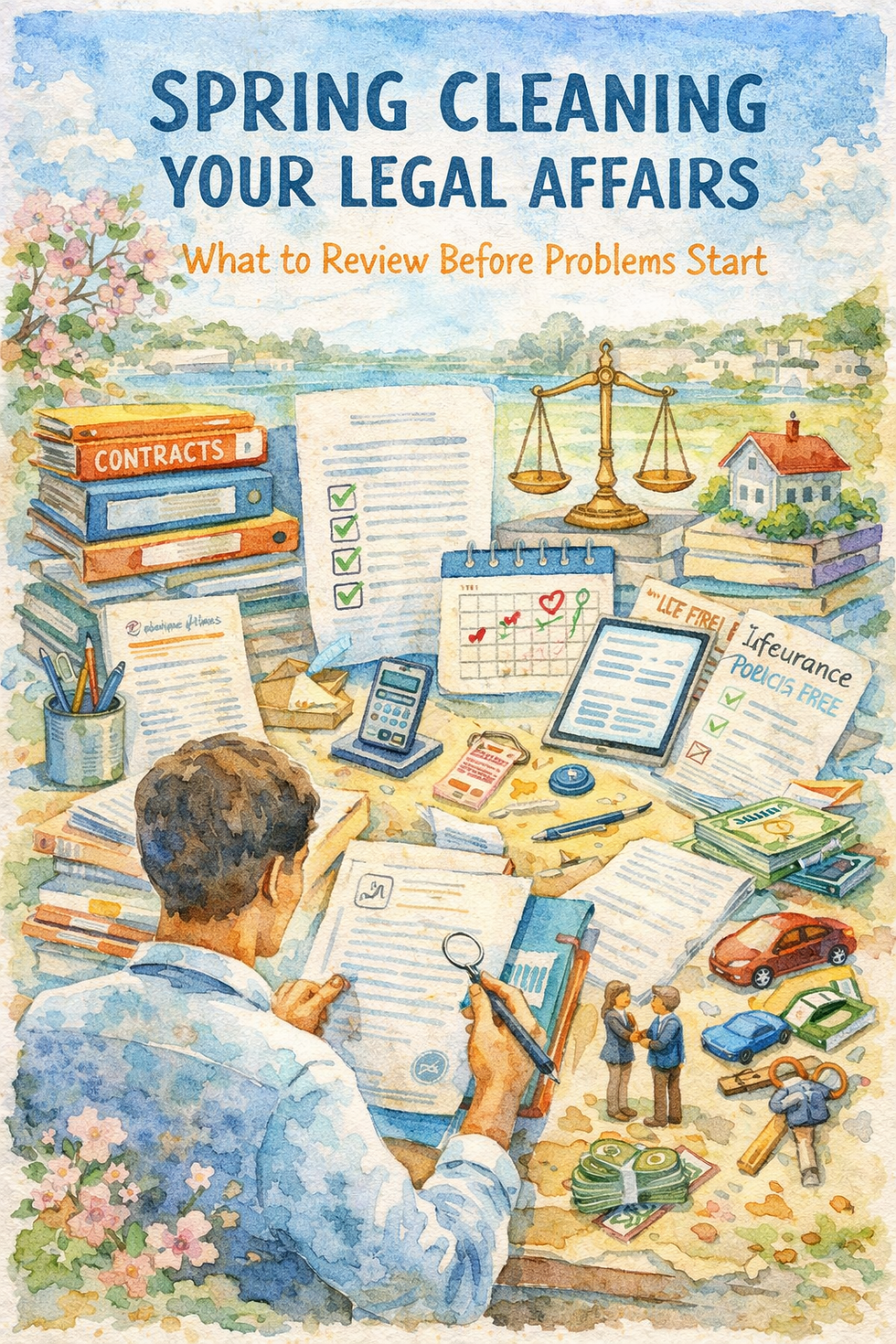
March is usually when people start thinking about getting things back in order. The weather begins to turn, projects that were put off over the winter come back into focus, and there is a general sense that it is time to catch up on what has been sitting in the background.
Most people think of spring cleaning in terms of closets, garages, and paperwork. What often gets overlooked is the value of doing the same thing with your legal and financial arrangements. Like anything else, small issues tend to build over time. A periodic review can prevent those issues from turning into larger problems later.
One of the most useful places to start is with contracts and agreements. Many people are operating under arrangements they have not looked at in years. That might include service agreements, leases, business relationships, or even informal written understandings that were never revisited. Terms that made sense at the time may no longer reflect how things actually work. A short review can help identify whether those agreements still serve their purpose or need to be updated.
Another common issue is outdated or incomplete records. Important documents are often scattered — some in a filing cabinet, some in email, some stored digitally with no clear system. When everything is working, this may not seem like a problem. But when something unexpected happens, the difficulty of locating key information can create unnecessary stress and delay. Taking the time to organize essential documents and ensure that the right people know where to find them is a simple but valuable step.
Property and ownership arrangements are also worth reviewing. In this region, land and property often change hands informally or are shared among family members. Over time, that can create confusion about who owns what, what rights exist, and what was intended. Even when everyone is acting in good faith, a lack of clarity can lead to misunderstandings. Confirming how property is titled and whether it matches current expectations can prevent those issues from developing.
For small business owners, spring is a good time to step back and look at how the business is structured. Many businesses start with informal arrangements and evolve over time. Roles shift, responsibilities change, and financial arrangements become more complex. Without periodic review, it is easy for the legal structure of the business to fall out of step with how it actually operates. That gap is where disputes and liability risks tend to arise.
Employment practices are another area that benefits from a fresh look. Job duties, compensation arrangements, and workplace expectations can drift over time, especially in smaller operations. What began as a temporary solution can become permanent without anyone formally addressing it. Clarifying expectations, updating policies, and ensuring consistency in how issues are handled can reduce risk for both employers and employees.
It is also worth reviewing insurance coverage and how it fits with current circumstances. Policies that were appropriate a few years ago may not reflect changes in property, business operations, or family needs. Coverage gaps often become apparent only after a loss occurs, when it is too late to adjust.
None of these steps require major changes. In many cases, the review confirms that things are in good order. But even that confirmation has value. It provides clarity and reduces uncertainty.
The goal of a spring legal review is not to anticipate problems. It is to prevent avoidable ones. Addressing small issues early is almost always simpler, less expensive, and less disruptive than dealing with them later.
This time of year is a natural opportunity to take a step back and look at the bigger picture. Just as clearing out a garage or organizing a workspace makes daily life easier, bringing order to legal and financial matters can provide a similar sense of stability.
In the end, the most effective legal planning is often the least noticeable. It is the quiet work done in advance that allows things to run smoothly when it matters most.


Comments